
At a glance
- 1No scan is better in every case; the doctor chooses by organ, condition and urgency.
- 2CT is fast and excellent for emergencies, bleeding, bones and lungs, but uses radiation.
- 3MRI uses no radiation and excels for the brain, nerves, spine and joints.
- 4Tell the team about any device or metal in your body before an MRI.
- 5Report pregnancy, allergies and kidney disease before any contrast scan.
"My doctor ordered an MRI, but my neighbour had a CT scan for the same complaint. Which one is better?" It is a question radiology departments hear all the time. The truth is that neither scan is better in every case. Each has its strengths and uses, and the doctor chooses according to the part of the body, the nature of the complaint, how urgent it is and the patient's health. This article explains the difference simply, so you understand your doctor's choice and can prepare for your scan with confidence.
CT scan: fast images using X-rays
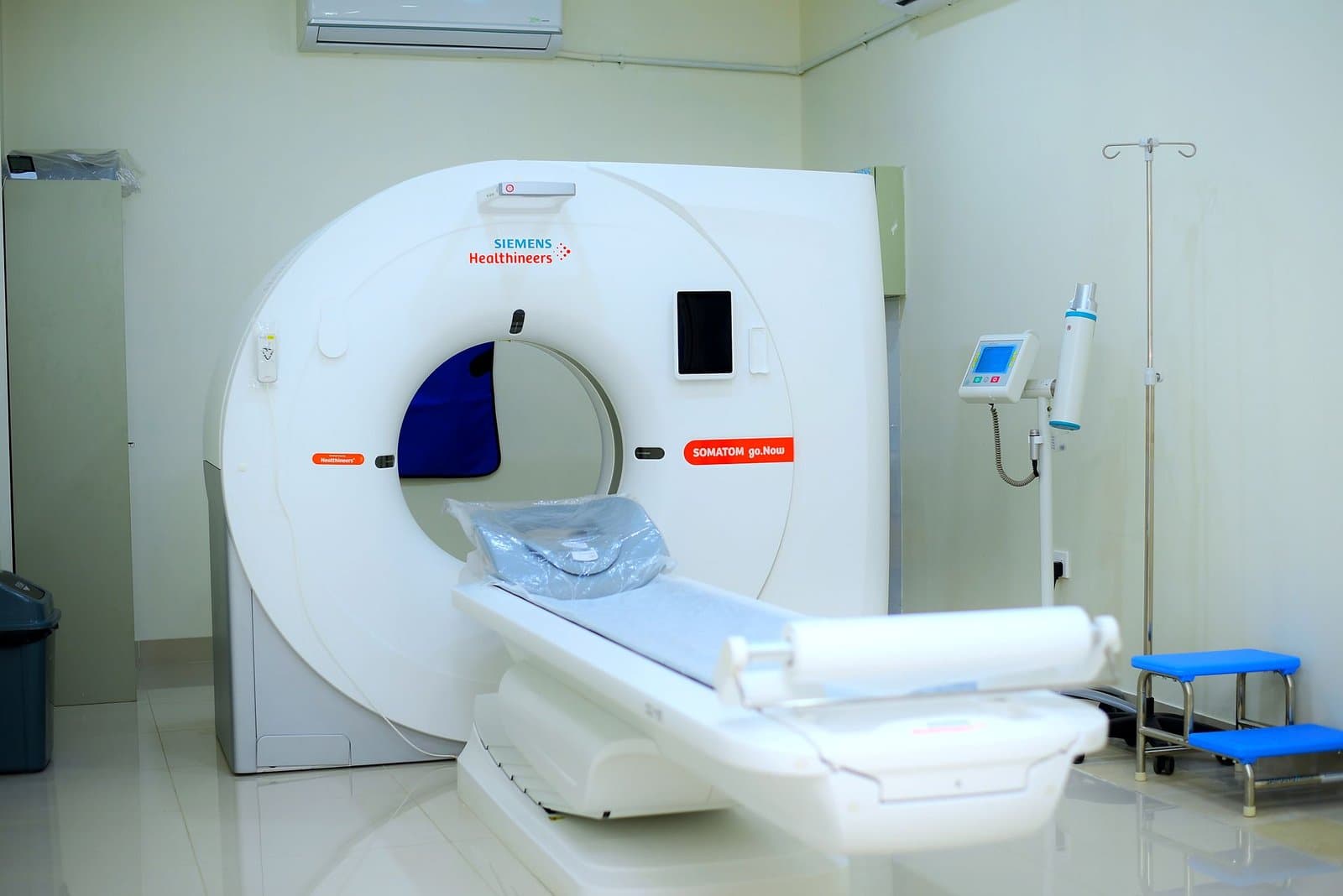
A CT scan uses X-rays that rotate around the body, and a computer turns the readings into detailed cross-sectional images, like a series of slices. You lie on a table that moves through a wide, open ring, and the scan itself usually takes only a few minutes.
Its main strengths:
- Speed: often the first choice in emergencies and after accidents.
- Excellent bone detail: for complex fractures, especially of the face, spine and pelvis.
- Rapid detection of bleeding: such as bleeding in the brain after a head injury or when stroke is suspected.
- Chest and lungs: imaging the lungs and, with contrast, detecting clots in the lungs.
- Abdomen: acute abdominal pain, kidney stones, and some cancers and their follow-up.
The main consideration is that it uses a dose of ionising radiation, so it is requested only when there is a clear benefit, using the lowest dose that gives a diagnosis. Some scans need an iodine-based contrast dye, which is why the team asks about allergies and kidney function.
MRI: soft-tissue detail without radiation
MRI uses a strong magnetic field and radio waves and involves no ionising radiation. You lie inside a tunnel-shaped scanner, and the examination usually takes 20 minutes to an hour depending on the area. The scanner makes loud knocking sounds, so you are given headphones or earplugs.
Its main strengths:
- Excellent soft-tissue detail: brain, spinal cord and nerves.
- Spine: the most accurate test for disc herniation and nerve compression.
- Joints: ligaments, cartilage and tendons, such as knee ligaments and shoulder tendons.
- Blood vessels and bile ducts: through dedicated techniques for imaging vessels and the bile and pancreatic ducts without an endoscope.
- Liver, pelvis, breast and heart in selected cases, and detailed characterisation of some masses and tumours.
Tap any tab to explore
CT and MRI at a glance
Choose a scan to see how it works, what it shows best and what to watch for.
CT scan
6 items- TechnologyX-rays with computer processing
- Durationusually a few minutes
- Best foremergencies, bleeding, fractures, lungs, kidney stones, acute abdominal pain
- Radiationuses a dose of ionising radiation
- Contrastiodine-based dye may be used, with questions about allergy and kidneys
- Comforta wide, open ring, easier for people who fear enclosed spaces
Often the fastest choice when every minute counts.
How does the doctor choose?
The decision rests on several questions. Which organ needs imaging? Is it an emergency that needs an answer within minutes? Is the patient a child or a pregnant woman, where radiation is best avoided? Do they have a metal device in the body or a kidney problem? Can they lie still for a long time? For example, after an acute head injury, CT is usually the fastest way to detect bleeding, while for persistent back pain with leg numbness, MRI is more accurate. Sometimes a patient needs both, because each answers a different question. So trust that the request is a considered medical decision, and do not ask for a particular scan just because it seems newer or more expensive.
When is MRI unsuitable or in need of precautions?
Before an MRI, tell the team about any device or metal in your body: a pacemaker or defibrillator, a cochlear implant, a drug pump, blood vessel clips, metal joints or plates, or metal fragments from old injuries, especially near the eye. Some devices allow scanning under special conditions and others do not; the specialist team decides once they know exactly what the device is.
- Fear of enclosed spaces: tell the team in advance. There are ways to help you relax, and a mild sedative may be suggested if needed.
- Pregnancy: MRI is usually avoided in the first three months unless necessary, and gadolinium contrast is avoided in pregnancy unless clearly needed.
- Kidney disease: contrast for either MRI or CT may require a kidney function test first.
MRI at Gaza Model Hospital
The hospital's radiology department uses a Siemens 1.5 Tesla MRI scanner, the field strength widely used around the world for most clinical examinations, from the brain, spine and joints to the abdomen and pelvis. The scanner is supported by AI-based image processing that helps produce clear images in a shorter time, and it uses a Free Helium system that reduces reliance on the helium used to cool the magnet. It performs MR angiography, MR imaging of the bile ducts and other specialised examinations, and the images are read by specialist radiologists who send the report to your treating doctor.
Tips before either scan
- Bring your doctor's request and any previous reports and images for comparison.
- Tell the team about allergies, especially to contrast, and about kidney disease, diabetes and your medicines.
- Follow any fasting instructions you are given.
- Remove metal and accessories, and keep still during the scan.
To ask about available scans and appointments in the radiology department at Gaza Model Hospital: 01-400401 or 783144445.
When to see a doctor
Don't wait if you notice any of these signs
- A head injury with vomiting, drowsiness or confusion — go to the emergency department immediately
- Sudden stroke symptoms such as one-sided weakness or slurred speech — call for an ambulance immediately
- A sudden, very severe and unusual headache — go to the emergency department immediately
- Persistent back pain with leg numbness or weakness
- A joint injury with swelling or instability lasting more than a few days
- Itching, rash or shortness of breath after contrast dye — tell the team at once
Your action steps
Tick what you've done — saved on this device
Frequently asked questions
Is MRI better because it has no radiation?
Is CT radiation dangerous?
Can I have an MRI with a joint replacement or metal plates?
What does 1.5 Tesla mean?
Do I need to fast before the scan?
 Trusted medical content
- Written by:
- Medical team — Gaza Model Hospital
- Published:
- 9 November 2026
This article is general health education and does not replace a consultation, diagnosis or treatment suited to your condition. In an emergency, call the hospital's emergency department right away.
Need a consultation?
Book online and the clinic team will contact you to confirm.