

At a glance
- 1Thalassaemia and sickle cell disease are common inherited blood disorders in our region.
- 2Carriers are usually healthy and can only be identified by a blood test.
- 3If both partners carry the same trait, there is a 25% chance of an affected child in each pregnancy.
- 4Marriage between relatives raises the chance that both carry the same trait.
- 5The best time to test is before or early in a formal engagement, with counselling when needed.
Each of us carries genes inherited from our parents that we will pass on to our children, and some of these genes can transmit serious blood disorders without the carrier ever knowing. Thalassaemia and sickle cell disease are among the most common inherited conditions in our region, and many families only learn about them after a child is born unwell. The reassuring news is that premarital screening can reveal the risk early, so couples can make their decision with full knowledge.
What are thalassaemia and sickle cell disease?
Both are inherited disorders of haemoglobin, the protein that carries oxygen inside red blood cells:
- Thalassaemia: the body makes too little haemoglobin, causing anaemia that can be severe in thalassaemia major, requiring regular blood transfusions for life along with treatment to remove excess iron.
- Sickle cell disease: an abnormal haemoglobin makes red cells take a sickle shape, so they get stuck in small blood vessels, causing severe pain crises, repeated infections and complications in many organs.
People can live with both conditions through treatment and follow-up, but they require long-term care and place a heavy burden on the child and family.
Carrier versus affected
This is the key to understanding the test. A carrier has inherited one altered gene from one parent and a normal gene from the other. Carriers are usually completely healthy and need no treatment, though a blood test may show slightly small red cells. A person who is affected has inherited the altered gene from both parents, and so has the disease.
Feeling healthy therefore does not mean you are not a carrier. The only way to know is a blood test.
How is it passed to children?
These conditions follow what is called recessive inheritance: a child is only affected if they inherit the altered gene from both the father and the mother.
Tap any tab to explore
What are the chances for children?
Choose the couple's result to see the chances in each pregnancy. These figures apply to beta-thalassaemia and sickle cell disease, and repeat with every pregnancy.
Both unaffected
2 items- Childrencannot inherit these diseases from their parents
- Carrier statusnot passed on
These chances apply to every pregnancy separately. Having one healthy child does not mean the next will be healthy, and the reverse is also true.
Marriage between relatives does not cause these diseases by itself, but it raises the chance that both partners carry the same trait because they share family roots. Screening is especially important when the couple are related, or when either family already has someone affected or known to be a carrier.
Which tests are needed?
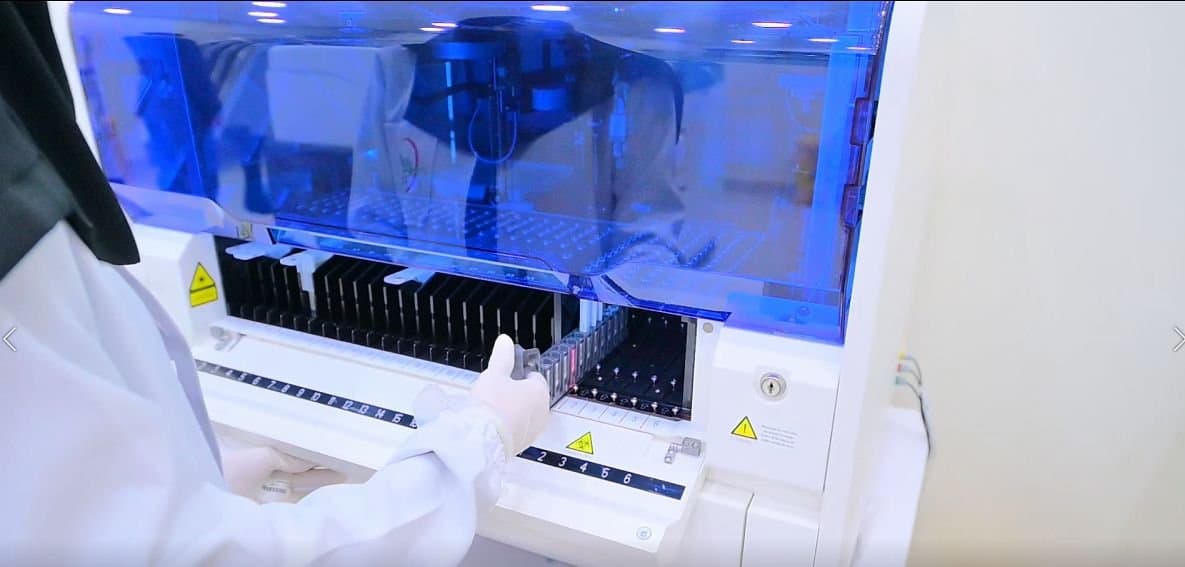
The test is simple, needs a single blood sample from a vein and usually does not require fasting. It generally includes:
- Complete blood count (CBC): measures haemoglobin and red cell size; small red cells may point to thalassaemia trait or to iron deficiency.
- Haemoglobin electrophoresis or HPLC: identifies the types of haemoglobin and detects beta-thalassaemia trait, sickle cell trait and other variants.
- Iron studies: may be requested to tell iron deficiency apart from carrier status, as the results can look similar.
- Genetic testing: may be needed in particular situations, such as suspected alpha-thalassaemia trait, which routine tests do not always detect.
What if both partners are carriers?
This result is not a verdict. It means a specialist consultation is needed before deciding. The doctor explains each partner's trait, how severe the possible disease could be, the chances in numbers, and the medical options available if they choose to marry, including early testing during pregnancy at specialised centres. The final decision belongs to the couple and their families, but it becomes an informed one.
When is the best time to be tested?
Ideally before or at the very start of a formal engagement, before emotions and arrangements are deeply settled, so that any decision is easier for everyone. There is also nothing wrong with being tested before marriage is even being considered: knowing your own status is useful throughout life.
What the test does not show
It is important to know the test's limits. It targets common haemoglobin disorders and does not detect every inherited condition. If another genetic disease runs in either family, mention it to the doctor so you can be guided to the right test.
The laboratory at Gaza Model Hospital offers premarital screening with a clear explanation of the results. A simple step today can protect your family's future.
When to see a doctor
Don't wait if you notice any of these signs
- Before engagement or marriage, especially if the couple are related
- A family member with thalassaemia, sickle cell disease or a known carrier
- A previous blood test showing small red cells without a clear cause
- If you are already married, planning a pregnancy and have never been tested
- Paleness, yellowish skin or slow growth in a child in the family
- Fever or severe pain in a child with sickle cell disease — go to the emergency department right away
Your action steps
Tick what you've done — saved on this device
Frequently asked questions
I am healthy with no complaints. Could I still be a carrier?
Is being a carrier a disease that needs treatment?
If only one of us is a carrier, is there any risk?
Do I need to fast for the test?
Does this test detect all inherited diseases?
 Trusted medical content
- Written by:
- Medical team — Gaza Model Hospital
- Published:
- 9 November 2026
This article is general health education and does not replace a consultation, diagnosis or treatment suited to your condition. In an emergency, call the hospital's emergency department right away.
Need a consultation?
Book online and the clinic team will contact you to confirm.

